
Tamagawa K-12 University
ContactAccessSitemapJapanese
About Tamagawa Higher Education K-12 Education Research Continuous Learning Facilities

Higher Education
Overview
Graduate School of Humanities
Graduate School of Agriculture
Graduate School of Engineering
Graduate School of Management
Graduate School of Education
Graduate School of Education (Teaching Profession)
Graduate School of Brain Sciences
Interdisciplinary Program
College of Humanities
College of Agriculture
College of Engineering
College of Business Administration
College of Education
College of Arts
College of Arts and Sciences
The University by Correspondence
First Year Experience
International Exchange
Admission
University Affiliated and Support Group
College of Arts


The history of the Department of Drama and Fine Arts, the Faculty of Arts and Education dates to its foundation in 1964. This department is proud of its unique educational methods, which are founded in the philosophy of "Zenjin" Education. In 2002, the department was made independent, as the College of Arts. The College of Arts consists of two new departments: the Department of Performing Arts and the Department of Visual Arts. Then, in 2006, the Department of Media Arts was founded. Each department strives to explore the connection of art and society and to enhance appreciation of the arts. The educational goal of the College is the training of producers, directors, planners, art managers and other artistic professionals who are able to serve as bridges between people and the arts within society.


Department of Performing Arts

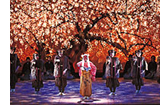
In recent years, the importance of the social role played by art education has become recognized. People with the ability to present the world of arts to society are in demand, and are expected to maintain constant ties with society. At the Department of Performing Arts, students take courses from four related course models. These courses consist of lessons on music, theater and dance performances, along with subjects on planning, business administration and application, which aim to build close ties with the society. Another main feature is that art management, which adds value to the arts, has been established as a specific area of study. "Performance," a course in which students experience the process of putting on theatrical and musical performances, offers practical lessons in the planning and operation of artistic activities, along with expression, theory, theater arts and production. This way, students learn to view music, theater and dance from comprehensive perspectives, and to broaden their general understanding of the arts. They are expected to function not only as artistic performance professionals, but also to assume important roles in other areas.


Department of Media Arts

The Department of Media Arts focuses on primarily two areas: computerized music studies and plastic art media studies (involving creative activity in media including movies, animation, computer graphics, the Web and space). Expression using digital media has made it possible to produce attractive content that was simply not available in the past. This concentration seeks to harness new digital tools to create artistic content chiefly in music and the plastic arts.

Students majoring in music will hone their basic expressive skills and senses through a study of areas such as composition, lessons, harmonics, and solfeggio, while those majoring in the plastic arts will do likewise through the study of fields such as design, painting, 3-D art, and basic design skills. Even virtual realms made possible by computer technology are rooted in artistic senses nurtured in "analogue" hand and motor skills.

In our course of studies, we have further set aside a provision whereby students engage in an intensive project that combines several selective elective subjects. The project system allows for students to demonstrate what they have learned with regard to creativity, the applying of their skills, research, and planning, and is moreover an opportunity to learn about how art interacts with society.

By providing these learning opportunities, we hope to nurture people who, through the medium of art, are able to freely communicate with people coming from different cultural backgrounds or holding different value systems, and who possess the vitality to carry out pioneering work in new fields. We shall further strive to foster talent that can surpass our expectations, and which is not awed by the rapid pace of development in an increasingly digitalized world.


Department of Visual Arts

In today’s society, new artistic expressions are born each day and new relationships have emerged between people’s lives and the arts. New forms of art education are in demand, in addition to the development of artistic skills. At the Department, students learn contemporary visual media such as modern design, images and computer art, along with the traditional arts of painting, sculpture and crafts. In other words, they come to know both the traditional and innovative aspects of the arts. Another main feature is that art management, which adds value to the arts, has been established as a specific area of study. In the "Exhibition" course students learn practical ways to integrate the planning and production aspects of an exhibition and presentation of art works.

Moreover, ecological perspectives are given consideration in artistic activities that handle diverse materials, to maintain good relations with the society. Students learn in an environment in which tradition and innovation, production and operation and skills and theories interact and stimulate each other. The Department aims to cultivate human resources that are capable of functioning not only as art professionals but also of assuming important rules in other areas.

Back to Top

Privacy Policy About This Site
copyright