
授業課題の期限内達成を予測する要因としてのグループ形成と役割分担
ジョン・リンガ著
1. はじめに (INTRODUCTION)
協調学習とは、学生が小グループで協力し、有意義な議論を通じて問題を解決したり、タスクを完了させたり、あるいはグループ内やペアで情報を共有することで新しい概念を理解したりする教育手法である (Laal & Laal, 2012)。この教育手法は、現代教育の向上において極めて重要な役割を担っており、学生のコミュニケーション能力、批判的・創造的思考、そしてチームワーク能力の育成を促すものである。
その利点の一方で、すべてのグループ活動において協調学習が常に成功するとは限らない。この教育手法を指導に取り入れる際には、考慮すべき要因が存在する。Peng, Komatsuzaki, and Sen (2025) の研究では、メンバー間の不平等な参加、責任感の欠如、そして最も重要な点として、割り当てられた時間内にタスクを完了できないといった非効率性にグループが直面することが多いと強調されている。また別の研究では、よく設計された協調学習アクティビティであっても、グループメンバー間のモチベーションの差や、割り当てられた時間内に目標を達成するためのコミュニケーション不足により、必ずしも成功が保証されるわけではないことが示されている (Hogenkamp, Van Dijk and Eysink, 2021)。Nemethら (2023) による研究は、協調学習の成果がグループメンバーの質の高さによって大きく変動することを示している。これらの知見は、有意義な相互作用と責任の共有が、協調学習を成功させるための不可欠な要素であることを示唆している。
上述の課題に対処するため、本研究では、グループ内に特定の役割を明確に割り当て、責任の所在をはっきりと定義し、各アクティビティに戦略的な時間を配分し、各メンバーの参加を確実にし、タスク完了までのプロセスを効率化するという構造化された戦略を用いる。本研究は、役割の定義と目的を持ったグループ形成が、いかに効率性と責任感を向上させるかを検証するものである。
2. 研究の問い (RESEARCH QUESTION)
1. 特定の役割を割り当てることは、グループ活動におけるタスクの効率性を向上させるか?
2. 目的を持ったグループ分けは、タスクの期限内完了率にどのように影響するか?
3. 役割とグループ分けは、学生の積極的な関与(エンゲージメント)と責任感にどのような影響を与えるか?
3.文献レビュー (LITERATURE REVIEW)
Johnson, D.W. および Johnson, R.T. (2009) の研究では、タスクの完了と良好な人間関係の構築という点において、協調学習は個人学習よりも大きな成果をもたらすことが明らかになった。協調学習の成功に影響を与える重要な要因の一つは、グループ内での特定の役割の明確な割り当てである。Kagan, S. (1994) が行った研究によると、リーダー、記録係、タイムキーパーといった構造化された役割は、参加の平等性を確保し、グループメンバーの「脱線行為(オフタスク)」を減少させることがわかった。
もう一つの重要な要素は、グループ形成、特に目的を持ったグループ分け(purposeful grouping)の活用である。Lou, Y. ら (1996) の研究では、能力混合型のグループが学生、特に学習の遅れがちな学生の学習体験にプラスの影響を与えることが示された。目的を持ったグループ分けを通じて、教師はスキルレベルに関して均等にバランスの取れたグループを作ることが可能になる。
成功する共同作業のもう一つの重要な側面には、関与(エンゲージメント)と責任感(アカウンタビリティ)が含まれる。Slavin, R.E. (2014) によれば、グループに対する責任と目標を組み込んだ協調学習の手法は、学生のモチベーションと教育活動への関与を高める。学生が自分自身だけでなく、グループに対しても責任を負うようになると、活動全体を通して関与し続けるようになる。
これまでの文献をまとめると、役割の割り当てと目的を持ったグループ分けを組み合わせることで、協調学習の効果を高めることができると言える。これらの考えに基づき、本研究では実際の場面における各変数の相互作用を検証する。
4. 調査方法 (METHODOLOGY)
本研究では、アクション・リサーチ・デザインを採用した。この手法により、教師兼研究者が実際の教室環境において指導戦略を導入し、その効果を評価することが可能となる。本研究は、構造化された役割と目的を持ったグループ分けを通じて、協調学習タスクの期限内完了を改善することに焦点を当てた。
調査は、第6学年の1クラスを対象に行われ、学生は5つのグループに分けられた。各グループには、研究の実施前に教師が判断した、さまざまな能力レベルの学習者が混合して構成された。
介入は以下の2つの段階(フェーズ)で実施された:
フェーズ1: 学生はランダムに割り当てられたグループで、構造化された役割(リーダー、記録係、タイムキーパー、確認係)を担いながら作業を行った。
フェーズ2: 同じ構造化された役割を維持しつつ、学生は目的を持って(意図的に)グループ分けされた。
各グループは同一のタスクを完了させた。各アクティビティの開始時に、指示と制限時間が明確に伝えられた。
ご提示いただいた画像(図1:役割と責任の定義)の翻訳です。
図1:役割と責任の定義 (Figure 1: Define roles and responsibilities)
| 役割 (Role) | 責任・担当業務 (Responsibilities) |
|---|---|
| タイムキーパー (Timekeeper) |
・各段階のタイマーを開始/停止する ・時間の警告(残り時間の告知)を行う ・行き詰まった時にグループを進行させる ・教師に成果物を見せるタイミングを合図する |
| リーダー (Reader) |
・各タスクを音読する ・その段階で何が必要かを要約する ・全員が指示を理解しているか確認する ・必要に応じてグループの集中力を戻す(軌道修正する) |
| 記録係 (Recorder) |
・グループの成果を分かりやすく書く ・教師のチェック用に最終回答を記録する ・合意が取れたら素早く修正を行う ・書面を整理し、読みやすく保つ |
| 確認係 (Checker) |
・提出前にすべての作業を見直す ・完了しているか、正確であるかを確認する ・間違いや欠落している箇所を見つける ・最終的な「チェック準備完了」の承認を出す |
Figure 1: Define roles and responsibilities
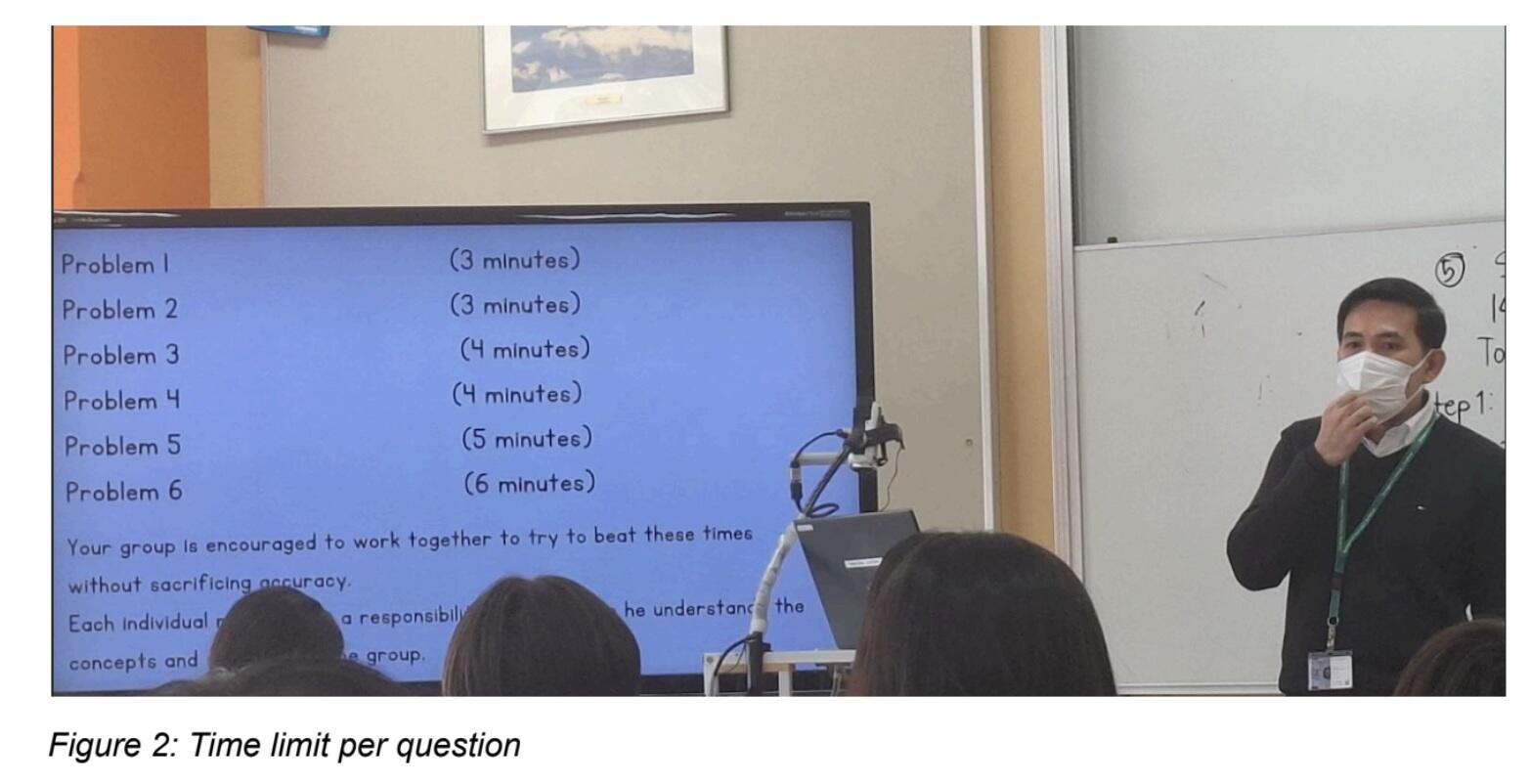
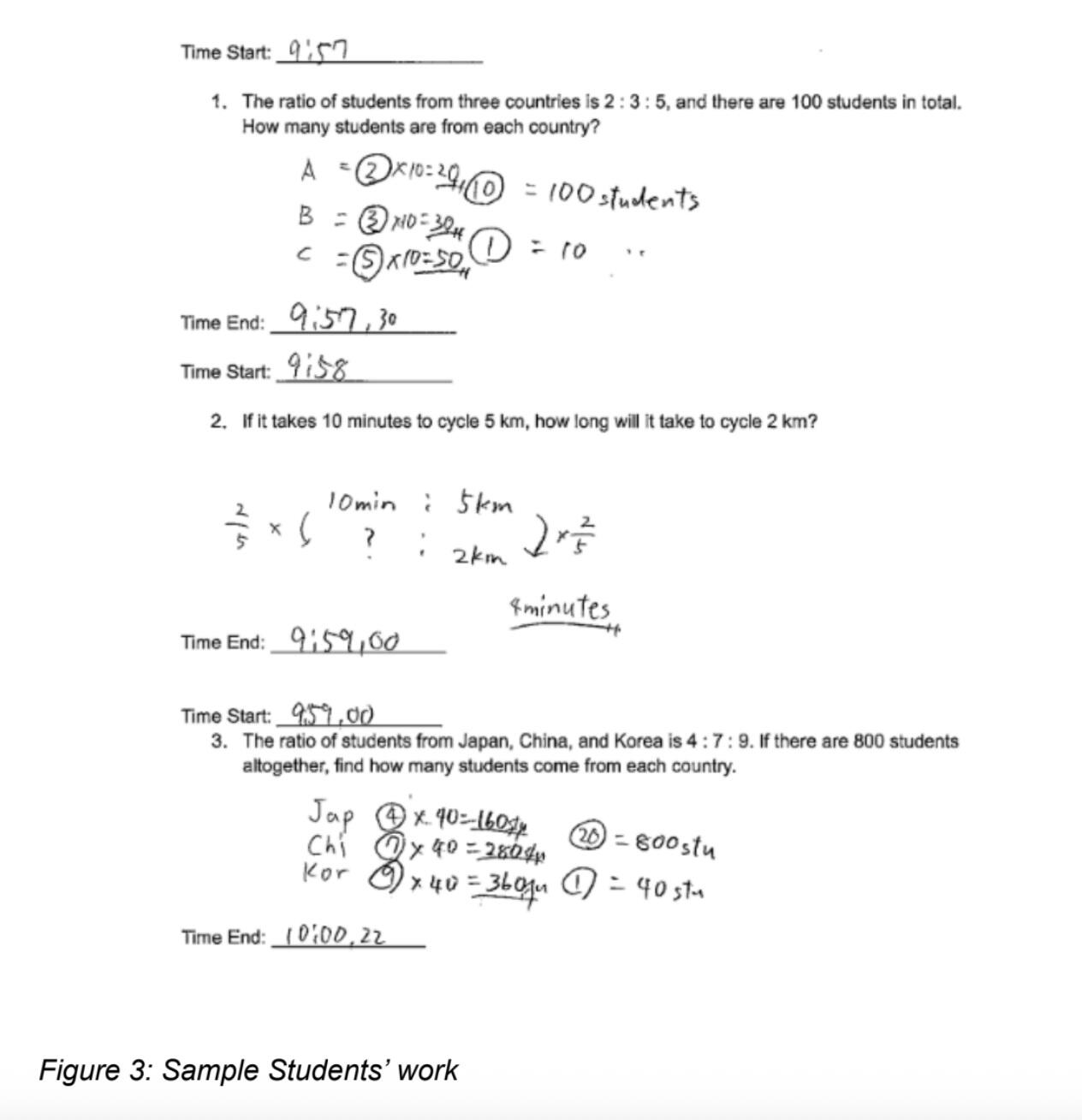
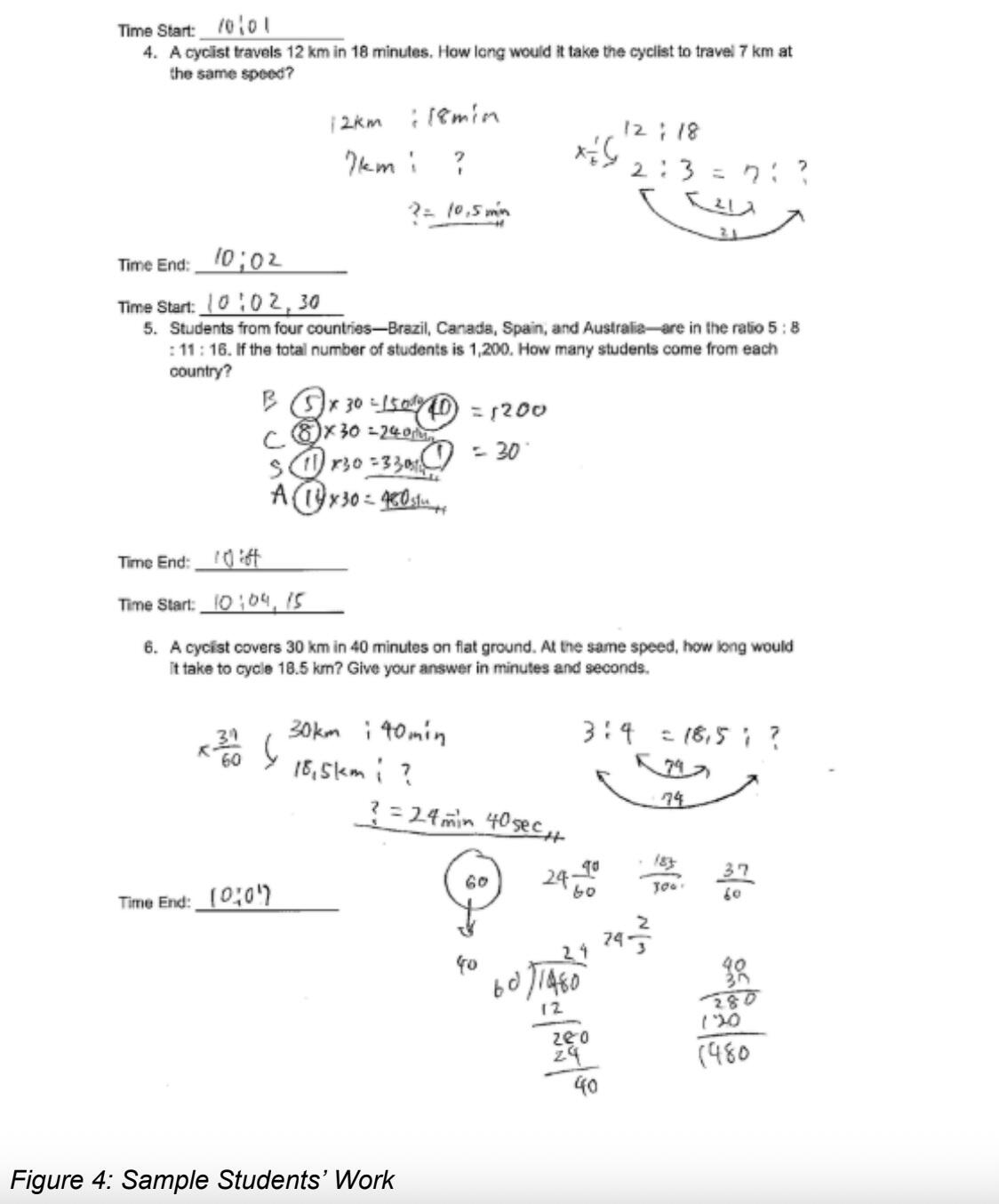
本研究では、構造化された役割と目的を持ったグループ分けが、タスクの期限内完了に与える影響を検証するために、量的データと質的データの収集方法を組み合わせて採用した。
量的データは、各目的別グループ分けの有効性を、パフォーマンスと効率性の観点から測定するために収集された。フェーズ1およびフェーズ2の両期間において、以下の指標が記録された。
表1:タスクを期限内に完了したグループの割合
(Table 1: Percentage of Groups Completing the Task on Time)
| 項目 | フェーズ1 の割合 | フェーズ2 の割合 |
|---|---|---|
| タスク完了 | 60% | 80% |
| タスク未完了 | 40% |
20% |
分析結果
フェーズ1では、60%のグループが期限内にタスクを完了しましたが、40%のグループは完了できませんでした。これは、半数近いグループがタスク完了のために割り当てられた時間を守れなかったことを示しています。
一方、フェーズ2では、80%のグループが期限内にタスクを完了しており、パフォーマンスの明確な向上が観察されました。同時に、タスクを完了できなかったグループの割合は20%低下しました。これは、期限内のタスク完了に失敗したグループが減少したことを示しています。
全体として、これらのデータはグループのパフォーマンスがフェーズ1からフェーズ2にかけて大幅に改善され、より多くのグループが期限内にタスクを完了できるようになったことを示唆しています。この結果は、「能力混合型のグループ編成(mixed ability grouping)」が、協調学習を成功させるための重要な要因の一つであることを実証しています。
質的データは、役割の分担と目的を持ったグループ分けが、学生の関与、協調性、および責任感にどのような影響を与えるかを深く理解するために収集されました。
フェーズ1 (Phase 1)
- 役割の理解: 学生は割り当てられた役割を理解していたが、すべてのグループで一貫して守られていたわけではなかった。
- 参加の格差: グループディスカッションに積極的に参加する学生がいる一方で、受動的なままの学生もいた。
- 完了率のばらつき: タスクの完了率にグループ間で大きな差が見られた。
- 不均衡なコミュニケーション: グループ内のコミュニケーションに偏りがあり、一部の学生が議論を支配していた。
- リーダーの苦戦: グループリーダーはタスクを管理しようと試みたが、一部のメンバーが参加していなかった。
フェーズ2 (Phase 2)
- バランスの取れた参加: フェーズ1に比べて、学生の参加がより均等になった。
- 役割の遵守: 割り当てられた役割が一貫して守られていた。
- 効果的な進行: グループリーダーが、フェーズ1よりも効果的にディスカッションを促進した。
- 教師の介入減少: 教師による指導や介入の必要性が減少した。
- タスクへの集中: グループ内のコミュニケーションが、よりタスクに直結したもの(タスク志向)になった。
5. 考察 (DISCUSSION)
本アクション・リサーチから得られた結果の分析により、フェーズ1(ランダムなグループ分け)からフェーズ2(目的を持ったグループ分け)へと移行する際、グループのパフォーマンスに顕著な改善が見られることが明らかになった。量的分析の結果によると、フェーズ1では60%のグループが期限内にタスクを完了したものの、40%のグループは完了に至らなかった。したがって、構造化された役割が存在したとしても、ランダムなグループ編成というプロセスは、グループの時間管理能力にマイナスの影響を与えたと結論付けることができる。この結果は、Johnson, D.W. および Johnson, R.T. (2009) の研究と一致している。
フェーズ2で得られた結果によれば、80%のグループが与えられた時間内にタスクを完了させることができ、完了できなかったのは20%にとどまった。これは、目的を持ったグループ分けがグループの効率性に好影響を与えたという予想通りの結果である。これらの知見は、協同教育理論に焦点を当てた Slavin (1996) の研究によっても裏付けられている。
質的に収集されたデータは、両フェーズにおける学生の行動についてより深い理解を与えてくれる。フェーズ1では、学生たちは各自の役割を認識していたものの、常にそれを遵守していたわけではなかった。グループ内のコミュニケーションは全般的に必ずしも十分に確立されておらず、一部の学生のみが積極的に議論に参加する場合があった。また、グループリーダーは割り当てられたタスクを完了させようと努力したが、すべてのメンバーが平等に努力したわけではなかった。これが、このフェーズにおいてタスクの完了率が低かった理由の一つであると考えられる。
しかしながら、第2フェーズでは学生の行動に顕著な変化が見られました。グループの力学(ダイナミクス)が向上したのです。学生はより積極的に参加し、それぞれの役割を一貫して守るようになりました。また、学生がより自己組織化されたことで、教師による介入も減少しました。
結論として、本研究の結果は、構造化された役割の割り当てが不可欠であることを示していますが、その効果は、目的を持った能力混合型のグループ編成を用いることで最大化されます。パフォーマンスが60%から80%へと大幅に向上したことは、グループがいかに構成されているかが協調作業の有効性を決定づけるということを示唆しています。
目的を持ったグループ編成は、責任の所在をより明確にし、参加を促し、効率性を向上させるのに役立ちます。本研究は、綿密に構成されたグループと役割構造を組み合わせることで、協調学習においてより大きな成功が得られることを示しています。
6. 提言 (RECOMMENDATION)
本研究の知見および結論を踏まえ、以下の提言を行います。
1. 役割分担の定着: 責任の所在を明確にするため、教師はほとんどのグループ活動において、構造化された役割分担(リーダー、記録係、タイムキーパー、確認係)を一貫して導入すべきである。
2. 役割の明確な説明: 学生が自分の責任を理解し、それを一貫して遂行できるよう、それぞれの役割について明確に説明する必要がある。
3. 戦略的なグループ編成: 協調性とタスク完了率を向上させるため、教師はランダムなグループ分けではなく、目的を持った能力混合型のグループ編成を採用すべきである。
4. 能力混合の最適化: ピア・サポート(仲間同士の助け合い)を促進し、理解度を深めるために、グループ構成には習熟度の高い学生と低い学生の両方を含めるべきである。
5. 自律性の促進: 学生がグループタスクの管理においてより自立し、自信を深めるにつれて、教師による介入を段階的に減らしていくべきである。
Group Formation and Role Allocation as Predictors of On-Time Class Activity Completion
by John LINGA
1. INTRODUCTION
Collaborative learning is an educational approach in which students work together in a small group to solve problems, complete tasks through meaningful discussion, and understand new concepts by sharing informative ideas within the group or in pairs (Laal & Laal, 2012). This educational approach plays a vital role in enhancing modern education, encouraging students to develop their communication skills, as well as critical and creative thinking, and teamwork skills.
Despite its benefits, collaborative learning is not always achieved in all group activities. There are factors that need to be considered when using this educational approach in teaching. In the study by Peng, Komatsuzaki, and Sen (2025), it was highlighted that groups often suffer from inefficiencies such as unequal participation among members, lack of accountability, and, most importantly, failure to complete tasks within the allotted time. Another study found that even well-designed collaborative learning activities do not guarantee success due to differences in motivation among group members and poor communication in meeting group goals within the allocated time (Hogenkamp, Van Dijk and Eysink, 2021). A study by Nemeth et al (2023), shows that collaborative learning outcomes are highly variable depending on the quality among members of the group. These findings suggest that meaningful interaction and shared responsibility are the vital components for the success of collaborative learning.
To address the challenges mentioned, a structured strategy is used by clearly assigning specific roles within groups, explicitly defining responsibilities, strategically allocating time for every activity, ensuring the participation of each group member, and streamlining task completion. This study examines how defining roles and forming purposeful groups can improve efficiency and accountability.
2. RESEARCH QUESTION
This study aims to examine to what extent do defining roles and purposeful grouping impact on-time competition within the context of collaboration and teamwork.
To further explore this, the study would answer the following questions:
1. Does assigning specific roles improve tasks efficiency in group activities?
2. How does purposeful grouping affect the rate of on-time task completion?
3. What do roles and groping have on student engagement and accountability?
3. LITERATURE REVIEW
In the study of Johnson, D.W. and Johnson, R.T. (2009), it was found that collaborative learning promotes greater success than individualistic learning in terms of task completion and the development of good relationships. One of the key factors that would influence the success of collaborative learning is the clear assignment of specific roles within the group. According to
research carried out by Kagan, S (1994), it was found that structured roles like leader, recorder and timekeeper ensure equality in participation and reduce off-task behavior among the group members. Another important element is group formation, particularly the use of purposeful grouping. A study by Lou, Y. et al. (1996), it was found that mixed ability groups positively affected the learning experience of students, especially underachievers. Through purposeful grouping, it is possible for teachers to create groups that are equally balanced with regards to skill levels. Another important aspect of successful collaborative work includes engagement and accountability. According to Slavin, R.E. (2014), collaborative learning methods that incorporate accountability and goals for groups increase motivation among students and their involvement in educational activities. When students become accountable for their group not only for themselves, they stay involved throughout the activity.
To summarize the literature, it can be stated that the combination of roles and purposeful groupings can increase the effectiveness of collaborative learning. Based on these ideas, this study examines the interaction between variables in practice.
4. METHODOLOGY
This study employed an action research design. The method allows the teacher-researcher to implement and evaluate instructional strategies within a real classroom setting. The research focused on improving on-time completion of collaborative tasks through structured roles and purposeful grouping.
The study was conducted in one of the Grade 6 classes consisting of students divided into 5 groups. Each group included learners of mixed ability, this was determined by the teacher prior to the implementation of the study.
The intervention was carried out in two phases:
Phase 1: Students worked in random assigned groups with structured roles (leader, recorder, timekeeper, and checker).
Phase 2: Students were purposefully grouped, maintaining the same structured roles.
Each group completed the same tasks. Instructions and time limits were clearly communicated at the start of each activity.
| Role | Responsibilities |
|---|---|
| Timekeeper | ・Start/stop timer for each stage ・Give time warnings ・Keep the group moving when stuck ・singnal when It's time to show work to the teacher |
| Reader | ・Read each task aloud ・Summarize what the stage requires ・Ensure everyone understands instructions ・Refocus the group when needed |
| Recorder | ・Write the group's work clearly ・Record final answers for teacher checking ・Make corrections quickly when agreed ・Keep the written worrk organized and legible |
| Checker | ・Review all work before submission ・Confirm completeness and accuracy ・Catch errors or missing parts ・Give final "ready for check" approval |
Figure 1: Define roles and responsibilities
This study used a combination of quantitative and qualitative data collection methods to examine the impact of structured roles and purposeful grouping on on-time task completion
Quantitative data were collected to measure the effectiveness of each purposeful grouping in terms of performance and efficiency. The following indicators were recorded during both Phase 1 and Phase 2.
Table 1: Percentage of Groups Completing the Task on Time
| Percentage | Phase 1 | Phase 2 |
|---|---|---|
| Task Completed | 60% | 80% |
| Task not Completed | 40% |
20% |
In Phase 1, 60% of groups completed the task on time, while 40% did not complete the task on time. This shows that less than half of the groups were not able to meet the time allocated to complete the task.
In Phase 2, 80% of the completed the task on time which indicates that a clear improvement in performance was observed. At the same time, the percentage of groups that did not complete the task dropped by 20%. This shows that fewer groups failed to complete the task on time.
Overall, the data suggest that group performance significantly improved from Phase 1 to Phase, with more groups completing the task on time. This validates that mixed ability grouping is one of the key factors in the success of collaborative learning.
Qualitative data were collected so that a thorough understanding of the impact of roles and purposeful grouping on student involvement, collaboration, and accountability could be gained.
Phase 1- Students understand the role assignment but not consistently followed by all groups.
- Some students actively participated in group discussions, while others remained passive.
- Completion rates varied significantly between groups.
- Group communication was uneven, some students dominated the discussion.
- Group leaders attempted to manage tasks, some group members were not participating.
- The participation was more balanced than in Phase 1.
- Role assignments were consistently followed.
- Group leaders facilitated discussions more effectively than in Phase 1.
- Less intervention from the teacher was given.
- Group communication was more task focused.
5. DISCUSSION
The analysis of results obtained from this action research reveals that there is an observable improvement in group performance when moving from Phase 1 (random groupings) to Phase 2 (purposeful groupings). According to the results provided by the quantitative analysis, 60% of groups successfully completed the task on time in Phase 1, while the 40% of groups failed to complete the task. Therefore, it can be concluded that the process of random grouping, despite the presence of structured roles, had a negative influence on the ability of groups to manage time. This result was aligned with the study of Johnson, D.W. and Johnson, R.T. (2009).
According to the results obtained in Phase 2, 80% of the groups managed to complete the task in the given time frame, which means that 20% failed to complete the task. It was expected that
purposeful grouping positively influenced group efficiency. The findings are supported by the study of Slavin (1996) that focused on cooperative learning theory.
The data collected qualitatively provide a deeper understanding of the behavior of the students during both phases. In Phase 1, even though the students were aware of their respective roles, they did not follow them all the time. Group communication in general was not always well-established; sometimes a few students actively participated in group discussions. Also, group leaders made efforts to complete the assigned tasks, but not all group members made equal efforts. This may be one of the reasons why fewer tasks were completed in this phase.
However, the second phase was marked by a noticeable change in the behavior of students. The group dynamics of the students became better. Students were more active in their participation and consistent in adhering to their respective roles. Also, there was less teacher intervention since students were more self-organized.
In conclusion, the results show that structured roles are critical, but their effectiveness can be maximized when purposeful mixed ability groupings are used. The significant increase in performance for 60% to 80% suggests that how groups are made up determines the effectiveness of collaborative work. The purposeful groupings can help ensure better accountability, promote participation and improve efficiency. This study shows that carefully made up groups, together with role structures, yield greeted collaborative success.
6. RECOMMENDATION
In light of the findings and conclusions, the following recommendations are offered:
1. Teachers should consistently use structured role allocation (leader, recorder, timekeeper, and checker) in most group activities to improve accountability.
2. Students’ roles must be clearly explained so that they understand their responsibilities and apply them consistently.
3. Teachers should adopt purposeful mixed ability grouping instead of random grouping to improve collaboration and task completion rates.
4. Group composition should include higher and lower ability students to promote peer support and improve understanding.
5. Teacher intervention should gradually decrease as students become more independent and confident in managing group tasks.
REFERENCES
Hogenkamp, B., van Dijk, A. M., & Eysink, T. H. S. (2021). Socially Shared Regulation of Learning
in Cooperative Learning: A review. Education Sciences, 11(9), 512.
https://doi.org/10.3390/educsci11090512
Johnson, D. W., & Johnson, R. T. (2009). An Educational Psychology Success Story: Social
Interdependence Theory and Cooperative Learning. Educational Researcher, 38(5),
365–379.
Kagan, S. (1994). Cooperative learning. Kagan Publishing.
Laal, M., & Laal, M. (2012). Collaborative learning: What is it? Procedia - Social and Behavioral
Sciences, 31, 491–495. https://doi.org/10.1016/j.sbspro.2011.12.092
Lou, Y., Abrami, P. C., Spence, J. C., Poulsen, C., Chambers, B., & d’Apollonia, S. (1996).
Within-class grouping: A meta-analysis. Review of Educational Research, 66(4), 423–458.
Nemeth, K., et al. (2023). Transactive Interaction Patterns in Cooperative Learning. Education
Sciences, 13(8), 790. MDPI.
Peng, X., Komatsuzaki, S., & Sen, S. (2025). Temporal Equal and Active participation in
Synchronous Collaborative Learning. PLOS ONE, 20(1), e0318122.
https://doi.org/10.1371/journal.pone.0318122
Slavin, R. E. (2014). Cooperative Learning and Academic Achievement: Why Does Groupwork Work? Annals of Psychology, 30(3), 785–791.
シェアする


関連リンク
