

Group Formation and Role Allocation as Predictors of On-Time Class Activity Completion
by John LINGA
1. INTRODUCTION
Collaborative learning is an educational approach in which students work together in a small group to solve problems, complete tasks through meaningful discussion, and understand new concepts by sharing informative ideas within the group or in pairs (Laal & Laal, 2012). This educational approach plays a vital role in enhancing modern education, encouraging students to develop their communication skills, as well as critical and creative thinking, and teamwork skills.
Despite its benefits, collaborative learning is not always achieved in all group activities. There are factors that need to be considered when using this educational approach in teaching. In the study by Peng, Komatsuzaki, and Sen (2025), it was highlighted that groups often suffer from inefficiencies such as unequal participation among members, lack of accountability, and, most importantly, failure to complete tasks within the allotted time. Another study found that even well-designed collaborative learning activities do not guarantee success due to differences in motivation among group members and poor communication in meeting group goals within the allocated time (Hogenkamp, Van Dijk and Eysink, 2021). A study by Nemeth et al (2023), shows that collaborative learning outcomes are highly variable depending on the quality among members of the group. These findings suggest that meaningful interaction and shared responsibility are the vital components for the success of collaborative learning.
To address the challenges mentioned, a structured strategy is used by clearly assigning specific roles within groups, explicitly defining responsibilities, strategically allocating time for every activity, ensuring the participation of each group member, and streamlining task completion. This study examines how defining roles and forming purposeful groups can improve efficiency and accountability.
2. RESEARCH QUESTION
This study aims to examine to what extent do defining roles and purposeful grouping impact on-time competition within the context of collaboration and teamwork.
To further explore this, the study would answer the following questions:
1. Does assigning specific roles improve tasks efficiency in group activities?
2. How does purposeful grouping affect the rate of on-time task completion?
3. What do roles and groping have on student engagement and accountability?
3. LITERATURE REVIEW
In the study of Johnson, D.W. and Johnson, R.T. (2009), it was found that collaborative learning promotes greater success than individualistic learning in terms of task completion and the development of good relationships. One of the key factors that would influence the success of collaborative learning is the clear assignment of specific roles within the group. According to
research carried out by Kagan, S (1994), it was found that structured roles like leader, recorder and timekeeper ensure equality in participation and reduce off-task behavior among the group members. Another important element is group formation, particularly the use of purposeful grouping. A study by Lou, Y. et al. (1996), it was found that mixed ability groups positively affected the learning experience of students, especially underachievers. Through purposeful grouping, it is possible for teachers to create groups that are equally balanced with regards to skill levels. Another important aspect of successful collaborative work includes engagement and accountability. According to Slavin, R.E. (2014), collaborative learning methods that incorporate accountability and goals for groups increase motivation among students and their involvement in educational activities. When students become accountable for their group not only for themselves, they stay involved throughout the activity.
To summarize the literature, it can be stated that the combination of roles and purposeful groupings can increase the effectiveness of collaborative learning. Based on these ideas, this study examines the interaction between variables in practice.
4. METHODOLOGY
This study employed an action research design. The method allows the teacher-researcher to implement and evaluate instructional strategies within a real classroom setting. The research focused on improving on-time completion of collaborative tasks through structured roles and purposeful grouping.
The study was conducted in one of the Grade 6 classes consisting of students divided into 5 groups. Each group included learners of mixed ability, this was determined by the teacher prior to the implementation of the study.
The intervention was carried out in two phases:
Phase 1: Students worked in random assigned groups with structured roles (leader, recorder, timekeeper, and checker).
Phase 2: Students were purposefully grouped, maintaining the same structured roles.
Each group completed the same tasks. Instructions and time limits were clearly communicated at the start of each activity.
| Role | Responsibilities |
|---|---|
| Timekeeper | ・Start/stop timer for each stage ・Give time warnings ・Keep the group moving when stuck ・singnal when It's time to show work to the teacher |
| Reader | ・Read each task aloud ・Summarize what the stage requires ・Ensure everyone understands instructions ・Refocus the group when needed |
| Recorder | ・Write the group's work clearly ・Record final answers for teacher checking ・Make corrections quickly when agreed ・Keep the written worrk organized and legible |
| Checker | ・Review all work before submission ・Confirm completeness and accuracy ・Catch errors or missing parts ・Give final "ready for check" approval |
Figure 1: Define roles and responsibilities
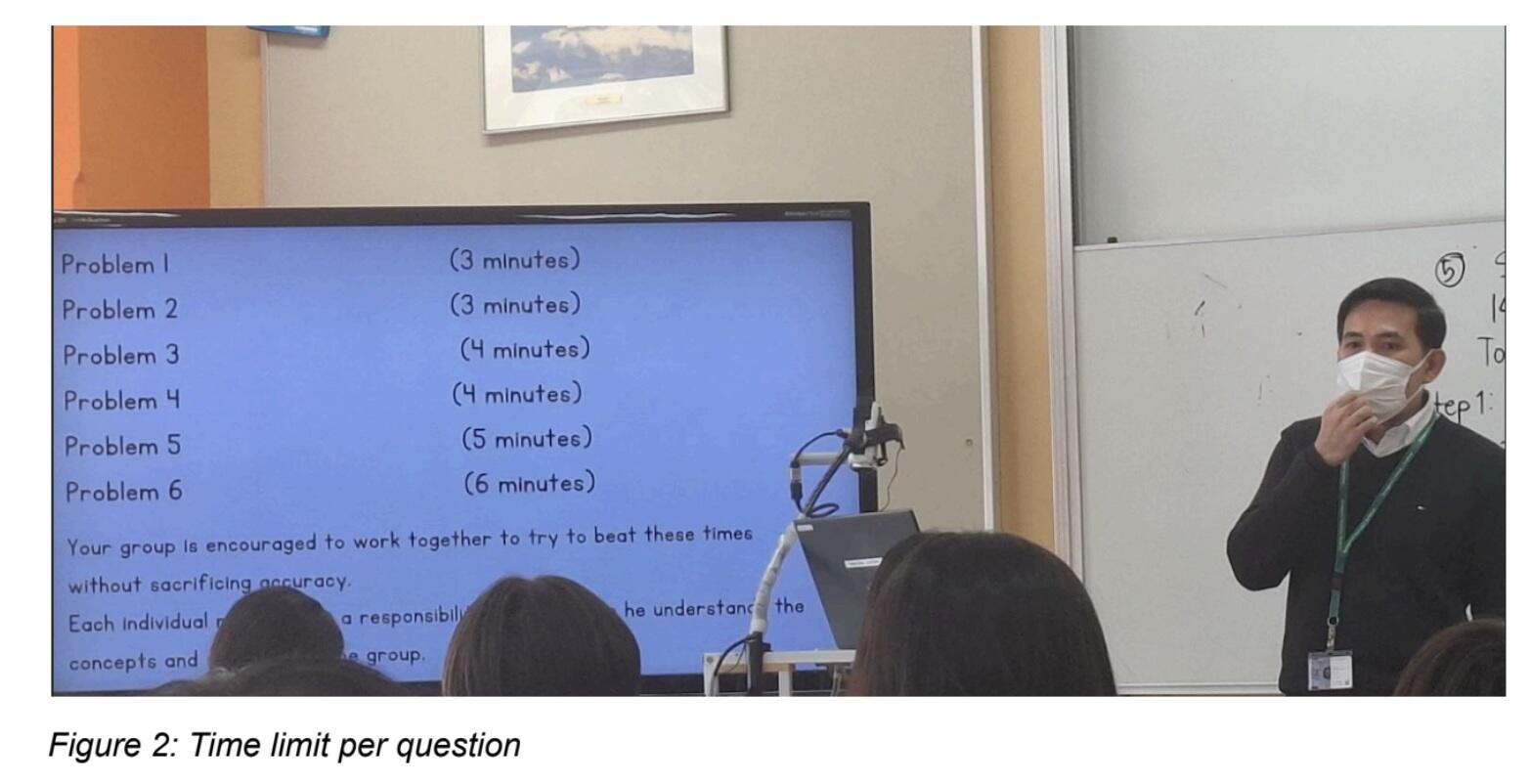
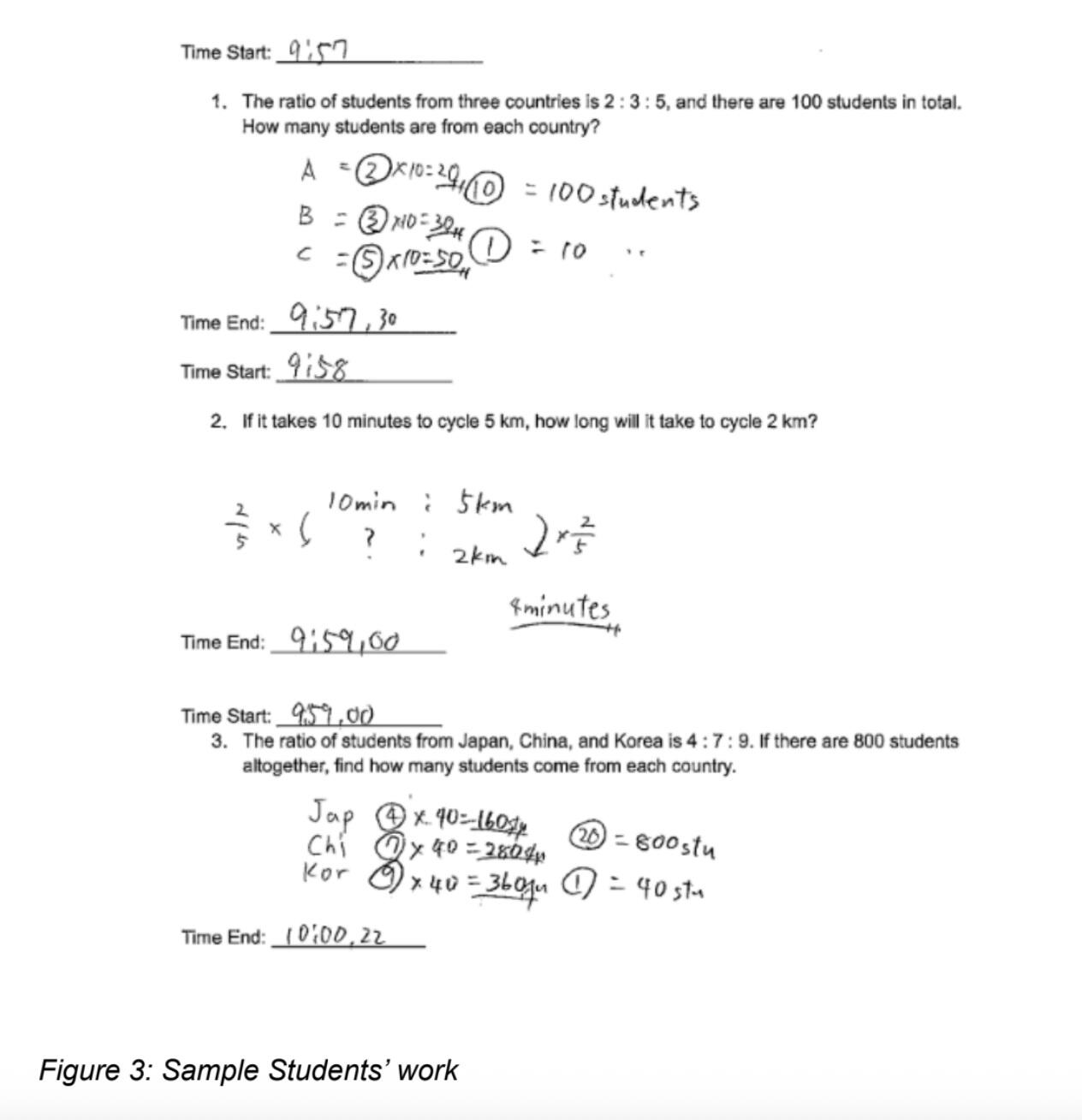
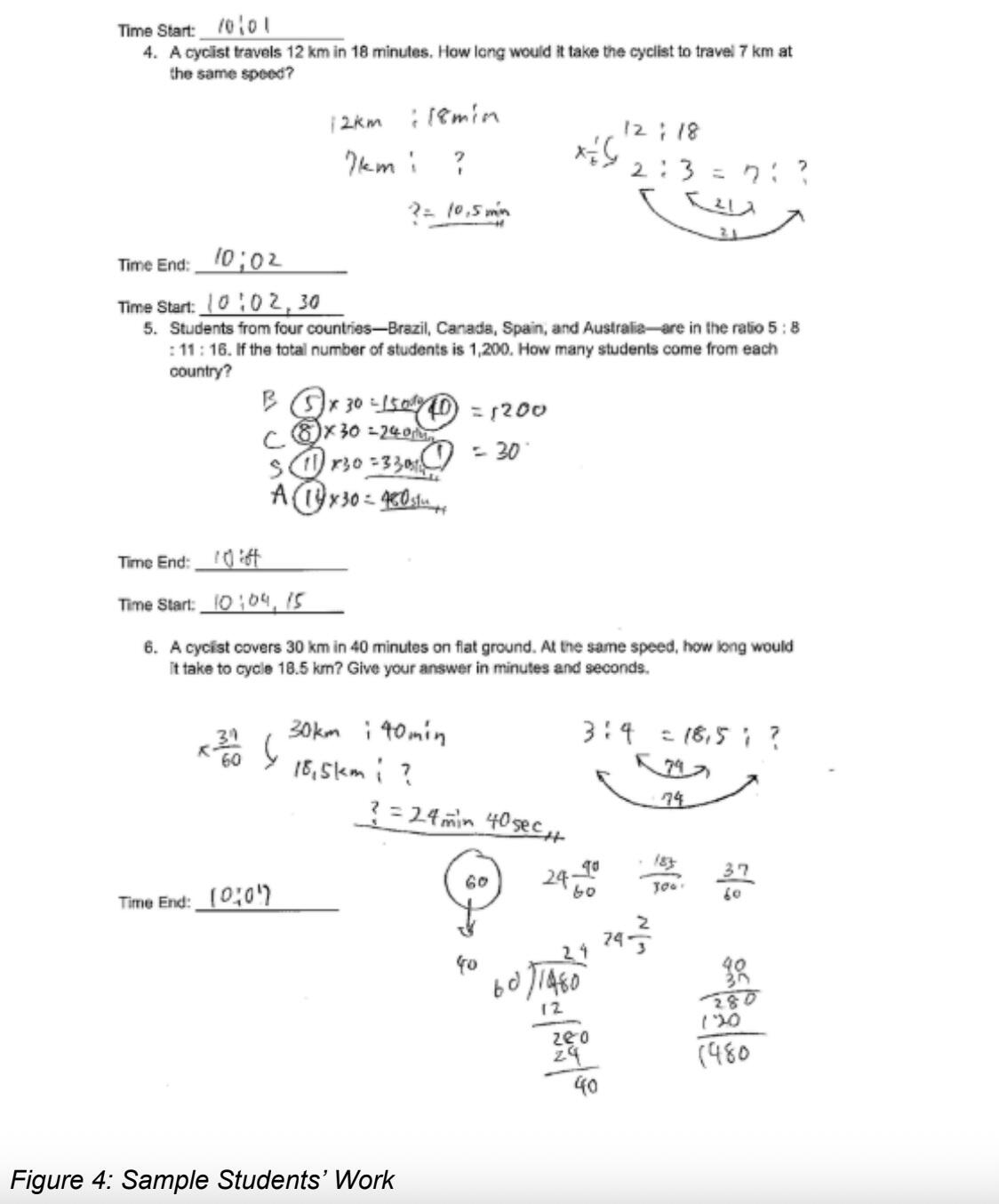
This study used a combination of quantitative and qualitative data collection methods to examine the impact of structured roles and purposeful grouping on on-time task completion
Quantitative data were collected to measure the effectiveness of each purposeful grouping in terms of performance and efficiency. The following indicators were recorded during both Phase 1 and Phase 2.
Table 1: Percentage of Groups Completing the Task on Time
| Percentage | Phase 1 | Phase 2 |
|---|---|---|
| Task Completed | 60% | 80% |
| Task not Completed | 40% |
20% |
In Phase 1, 60% of groups completed the task on time, while 40% did not complete the task on time. This shows that less than half of the groups were not able to meet the time allocated to complete the task.
In Phase 2, 80% of the completed the task on time which indicates that a clear improvement in performance was observed. At the same time, the percentage of groups that did not complete the task dropped by 20%. This shows that fewer groups failed to complete the task on time.
Overall, the data suggest that group performance significantly improved from Phase 1 to Phase, with more groups completing the task on time. This validates that mixed ability grouping is one of the key factors in the success of collaborative learning.
Qualitative data were collected so that a thorough understanding of the impact of roles and purposeful grouping on student involvement, collaboration, and accountability could be gained.
Phase 1- Students understand the role assignment but not consistently followed by all groups.
- Some students actively participated in group discussions, while others remained passive.
- Completion rates varied significantly between groups.
- Group communication was uneven, some students dominated the discussion.
- Group leaders attempted to manage tasks, some group members were not participating.
- The participation was more balanced than in Phase 1.
- Role assignments were consistently followed.
- Group leaders facilitated discussions more effectively than in Phase 1.
- Less intervention from the teacher was given.
- Group communication was more task focused.
5. DISCUSSION
The analysis of results obtained from this action research reveals that there is an observable improvement in group performance when moving from Phase 1 (random groupings) to Phase 2 (purposeful groupings). According to the results provided by the quantitative analysis, 60% of groups successfully completed the task on time in Phase 1, while the 40% of groups failed to complete the task. Therefore, it can be concluded that the process of random grouping, despite the presence of structured roles, had a negative influence on the ability of groups to manage time. This result was aligned with the study of Johnson, D.W. and Johnson, R.T. (2009).
According to the results obtained in Phase 2, 80% of the groups managed to complete the task in the given time frame, which means that 20% failed to complete the task. It was expected that
purposeful grouping positively influenced group efficiency. The findings are supported by the study of Slavin (1996) that focused on cooperative learning theory.
The data collected qualitatively provide a deeper understanding of the behavior of the students during both phases. In Phase 1, even though the students were aware of their respective roles, they did not follow them all the time. Group communication in general was not always well-established; sometimes a few students actively participated in group discussions. Also, group leaders made efforts to complete the assigned tasks, but not all group members made equal efforts. This may be one of the reasons why fewer tasks were completed in this phase.
However, the second phase was marked by a noticeable change in the behavior of students. The group dynamics of the students became better. Students were more active in their participation and consistent in adhering to their respective roles. Also, there was less teacher intervention since students were more self-organized.
In conclusion, the results show that structured roles are critical, but their effectiveness can be maximized when purposeful mixed ability groupings are used. The significant increase in performance for 60% to 80% suggests that how groups are made up determines the effectiveness of collaborative work. The purposeful groupings can help ensure better accountability, promote participation and improve efficiency. This study shows that carefully made up groups, together with role structures, yield greeted collaborative success.
6. RECOMMENDATION
In light of the findings and conclusions, the following recommendations are offered:
1. Teachers should consistently use structured role allocation (leader, recorder, timekeeper, and checker) in most group activities to improve accountability.
2. Students’ roles must be clearly explained so that they understand their responsibilities and apply them consistently.
3. Teachers should adopt purposeful mixed ability grouping instead of random grouping to improve collaboration and task completion rates.
4. Group composition should include higher and lower ability students to promote peer support and improve understanding.
5. Teacher intervention should gradually decrease as students become more independent and confident in managing group tasks.
REFERENCES
Hogenkamp, B., van Dijk, A. M., & Eysink, T. H. S. (2021). Socially Shared Regulation of Learning
in Cooperative Learning: A review. Education Sciences, 11(9), 512.
https://doi.org/10.3390/educsci11090512
Johnson, D. W., & Johnson, R. T. (2009). An Educational Psychology Success Story: Social
Interdependence Theory and Cooperative Learning. Educational Researcher, 38(5),
365–379.
Kagan, S. (1994). Cooperative learning. Kagan Publishing.
Laal, M., & Laal, M. (2012). Collaborative learning: What is it? Procedia - Social and Behavioral
Sciences, 31, 491–495. https://doi.org/10.1016/j.sbspro.2011.12.092
Lou, Y., Abrami, P. C., Spence, J. C., Poulsen, C., Chambers, B., & d’Apollonia, S. (1996).
Within-class grouping: A meta-analysis. Review of Educational Research, 66(4), 423–458.
Nemeth, K., et al. (2023). Transactive Interaction Patterns in Cooperative Learning. Education
Sciences, 13(8), 790. MDPI.
Peng, X., Komatsuzaki, S., & Sen, S. (2025). Temporal Equal and Active participation in
Synchronous Collaborative Learning. PLOS ONE, 20(1), e0318122.
https://doi.org/10.1371/journal.pone.0318122
Slavin, R. E. (2014). Cooperative Learning and Academic Achievement: Why Does Groupwork Work? Annals of Psychology, 30(3), 785–791.